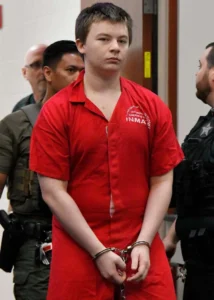

Alexander Crain was a fourteen year old living in Florida when he would murder his parents
According to court documents 911 would receive a call from Alexander Crain telling them that he had just shot and killed his parents Thomas and Kelly Crain
When officers arrived they would find the bodies of Thomas and Kelly Crain
Alexander Crain behavior with officers was odd. When the officers were interacting with him he would be crying uncontrollably however when Crain felt that no one was watching he would instantly stop
Alexander Crain would be arrested, convicted and sentenced to twenty years in prison
Where Is Alexander Crain Today
Alexander Crain is currently incarcerated at the Desoto Work Camp in Florida
Alexander Crain Current Information

| DC Number: | Y49056 |
|---|---|
| Name: | CRAIN, ALEXANDER T |
| Race: | WHITE |
| Sex: | MALE |
| Birth Date: | 07/19/1996 |
| Initial Receipt Date: | 05/11/2012 |
| Current Facility: | DESOTO WORK CAMP |
| Current Custody: | MINIMUM |
| Current Release Date: | 01/29/2028 |
Alexander Crain Case
Alex Crain, the 14-year-old boy arrested in the shooting deaths of his parents, has been charged as an adult with two counts of manslaughter with a firearm.
Each count, a first-degree felony, carries a maximum 30-year prison sentence.
Crain is accused of shooting parents Thomas and Kelly Crain in the family’s Golden Gate Estates home on Dec. 9. He was originally arrested on a pair of second-degree murder charges.
Crain is at the Naples Jail Center, where he is being held in medical housing as ‘a precaution,’ Collier County Sheriff’s Office spokeswoman Michelle Batten said. He would be moved to a juvenile wing of the jail when medically cleared, Batten said.
‘He’s separated from other adults,’ she said.
Crain will appear on Thursday before a Collier Circuit judge, who will determine whether to set a bond for the teenager.
Tuesday’s formal filing by Assistant State Attorney Richard Montecalvo follows a lengthy review of the case by the State Attorney’s Office. Crain’s family and attorneys sought to have him charged as a juvenile, a path that would result in milder penalties than an adult filing.
A psychiatric evaluation of Crain was conducted on behalf of the state, and Crain’s attorneys had two more performed, the results of which they shared with prosecutors.
‘(The decision) was based on all of the facts and evidence we are able to review at this time,’ State Attorney’s Office spokeswoman Samantha Syoen said.
Crain’s grandmother, Nancy Ward, declined comment on Tuesday.
Reached by phone, Alexander Crain attorney Mark Rankin said he and co-counsel Brian Bieber anticipated the filing, following a conversation with prosecutors.
Although the adult filing goes against the family’s wishes, Rankin said they were heartened murder charges were not filed.
‘It’s culpable negligence instead of intent to kill,’ he said of the distinction. ‘And I think the state looked at our doctors’ reports and their own doctor’s report and evaluated the unique circumstances?that he’s such a young kid, that it’s his parents.’
Second-degree murder carries a maximum life sentence in prison.
Little evidence has been released publicly in the case. Deputies found the bodies of Thomas, 40, and Kelly, 39, in the master bedroom of their home at 4240 47th Ave. NE, following an emergency call from the home at 8:30 a.m.
Alexander Crain was the only other person inside the home.
Evidence of what happened before the shooting, and Crain’s mindset, have yet to be made public.
Such factors are central to a prosecutor’s determination of how to file against a juvenile, said Abe Laeser, a Dade County attorney who spent 36 years as a prosecutor in the 11th Circuit State Attorney’s Office in South Florida.
Not all crimes are created equal, and neither are all juveniles, Laeser said. The psychiatric evaluations in Crain’s case likely plumbed the teenager’s maturity, as well as his mental state.
‘Ultimately I’m going to try to get as much information as I can about the sophistication of the child,’ he said. ‘Age of course is an issue, their mental history, if known, their school history.’
More evidence will come out of the case once the state begins sharing its evidence with Alexander Crain’s defense attorney.
The case is one of several high-profile homicides involving juveniles in recent months.
Last August, 13-year-old Jonathan Rowles was arrested after Collier detectives say he shot and killed his mother in their East Naples home. Prosecutors charged Rowles with a manslaughter as a juvenile.
In January, deputies arrested Jorge Saavedra, 14 at the time, on a manslaughter charge after they say he stabbed fellow Palmetto Ridge High student Dylan Nuno, 16, during a fight outside a Golden Gate Estates bus stop. Prosecutors charged Saavedra last week with armed manslaughter, as a juvenile.
Alexander Crain, like Saavedra, was a freshman at Palmetto Ridge High School.
Past homicide cases involving juveniles tried as adults have received heavy attention in the media. Among the most notorious are the Lords of Chaos and Cash Feenz, both Lee County cases involving older juveniles.
In the Lords of Chaos case, a gang of teens that included 17-year-old Pete Magnotti murdered high school Mark Schwebes. Magnotti is now serving a 32-year prison sentence.
The Cash Feenz killings saw three juveniles charged and sentenced as adults in the murders of teenagers Alexis and Jeffrey Sosa. Ashley Toye and Roderick Washington, both 17 at the time, were sentenced to life. Iriana Santos, 16 at the time, pleaded and received 25 years.
In Collier, teenagers Mazer Jean and Jermaine Jones received life sentences after murdering a guard at an Ochopee juvenile detention camp in 1998. Jean was 17 at the time; Jones was 16.
Other juvenile homicide cases are less aggravated, involving vehicle crashes or accidents.
In a recent Collier case, Riccardo Rivas, 18, pleaded no contest on Tuesday to a vehicular homicide charge from a 2009 crash. Rivas, who was 16 at the time of the accident, was sentenced as a youthful offender to one year in prison and four on probation.
Alexander Crain’s attorneys may seek the same designation. A youthful offender distinction during sentencing caps a defendant’s maximum incarceration at six years, to be served in a separate facility from adult prisoners.
‘That’s at least within the realm of possibilities,’ Rankin said of the designation.
Laeser, the former prosecutor, said the program has a downside. A youthful offender who violates probation may face the full guideline sentence, he said.
14-year-old Alex Crain charged as adult, manslaughter for killing parents
Alexander Crain: The Fourteen Year Old Teen Who Shot His Parents And Then Claimed He Was Sleepwalking
Most parricide cases involving teenagers follow a familiar pattern: years of abuse, a fight that escalates, or a cold calculation for money. The Alexander Crain case does not fit neatly into any of those boxes.
On a Thursday morning in December 2010, Collier County dispatchers received a call from a boy in Golden Gate Estates. The caller was calm, then hysterical, then confused. “I was sleeping and the next thing I know I had a gun in my hand and my parents were on the ground,” he said. He was 14 years old. His parents, Thomas and Kelly Crain, were dead in their master bedroom.
What followed was a three-year legal battle over a single question: was this a child suffering a severe mental break, possibly sleepwalking, or a teenager who committed an intentional double homicide and then performed grief for the cameras? Prosecutors ultimately charged him as an adult with manslaughter, not murder. He pleaded no contest and was sentenced to 20 years.
This is one of Florida’s most debated juvenile homicide cases because the facts are undisputed, but the why remains unsettled.
Who Is Alexander Crain?
Alexander T. Crain was born on July 19, 1996. At the time of the shootings he was a freshman at Palmetto Ridge High School in Collier County, Florida, and lived with his parents in a rural section of Golden Gate Estates.
School records were not released publicly, but court filings describe him as a 14-year-old with no prior criminal history. Neighbors later described the family as private but unremarkable. There were no documented reports of domestic violence or child protective services involvement before December 2010.
After his arrest, he was initially held at the Naples Jail Center in medical housing as a precaution, separated from adult inmates, before being moved to juvenile detention. His initial receipt into the Florida Department of Corrections system is dated May 11, 2012, after sentencing.
Today he is housed at Desoto Work Camp in minimum custody, with a current release date listed as June 23, 2028.
The Victims: Thomas and Kelly Crain
Thomas Crain was 40. Kelly Crain was 39. They lived at 4240 47th Ave. NE in Naples, a property on the edge of the Everglades where lots are large and homes are spaced apart.
Little has been made public about their occupations or family life, in part because the surviving family, including Alexander’s grandmother Nancy Ward, declined to speak to media during the prosecution. What is known comes from the crime scene report: both were found in their master bedroom after an emergency call from the home at 8:30 a.m. on December 9, 2010. Alexander was the only other person inside the home.
December 9, 2010: What Happened
According to court documents, Alexander Crain phoned 911 in the middle of the night, telling the operator that he had shot and killed both of his parents and did not know why. He was fourteen years old when he shot and killed both of his parents in Florida.
Deputies arrived to find the bodies of Thomas, 40, and Kelly, 39, in the master bedroom of their Golden Gate Estates home. The time of the call was logged at approximately 8:30 a.m.
The weapon was a family firearm. Investigators have never publicly released the exact make or how Alexander accessed it, but the charging documents confirm two fatal gunshot wounds.
The 911 Call
The 16-minute recording, later obtained by NBC, is central to the case. It captures a teenager swinging between panic and flat affect.
Key excerpts verified in court reporting:
- “I was sleeping and the next thing I know I had a gun in my hand and my parents were on the ground,” he told the dispatcher.
- He repeatedly said he did not know why it happened, that he was not on any medication, he was not upset with his parents, and that he had simply stayed home sick from school that day.
- “I love my parents,” he cried, “I love my parents.”
He also grew frustrated at the response time, asking why ambulances were taking so long. Later, in the back of a patrol car, a dashcam recorded him piecing it together: “That’s why there’s no EMS,” he said, realizing his parents were dead.
The Behavior That Troubled Police
First responders noted something unusual that would be discussed at every hearing. Alexander Crain’s behavior with officers was odd. When officers were interacting with him he would be crying uncontrollably, however when Crain felt that no one was watching he would instantly stop.
A separate account described the same pattern: when he was being watched by police he would be hysterical but as soon as they turned away, or at least he thought they turned away, his demeanour would be calm.
Prosecutors never alleged this proved guilt, but they cited it when arguing for adult court, suggesting a level of awareness and control inconsistent with a complete dissociative episode. Defense attorneys countered that trauma responses in children are erratic and that the observation was being misread.
Investigation and Initial Charges
Alexander was originally arrested on two counts of second-degree murder, which in Florida carries a maximum penalty of life in prison. He was held in secure juvenile detention for 21 days following his first appearance on December 10, 2010.
The Collier County Sheriff’s Office released few details, stating only that evidence of what happened before the shooting and Crain’s mindset had yet to be made public. The bodies were found in the master bedroom, and Alexander was the only other person in the house.
The Adult vs. Juvenile Decision
This became the legal flashpoint. In Florida, prosecutors have discretion to direct-file juveniles as adults for serious felonies.
After a lengthy review, the State Attorney’s Office announced it would charge Crain as an adult with two counts of Manslaughter with a Firearm for the shooting and killing of his parents Thomas and Kelly Crain.
Each count was a first-degree felony carrying a maximum 30-year prison sentence, for a total exposure of 60 years. The general guideline discussed in court was about 20 years.
Why manslaughter instead of murder? Assistant State Attorney Richard Montecalvo never gave a full public explanation, but defense attorney Mark Rankin said prosecutors had reviewed three psychiatric evaluations, one for the state and two for the defense. Rankin told reporters: “It’s culpable negligence instead of intent to kill. And I think the state looked at our doctors’ reports and their own doctor’s report and evaluated the unique circumstances that he’s such a young kid, that it’s his parents.”
The family had pushed hard for juvenile court, which would have capped any commitment at age 21. Crain’s family and attorneys sought to have him charged as a juvenile, a path that would result in milder penalties than an adult filing.
Prosecutors said the decision was based on all facts and evidence, and that they determined there really weren’t any mental issues that gave us concern, despite the defense claim that Crain was suffering from a severe mental illness.
The Sleepwalking Theory
The case gained national podcast attention because of Alexander’s own words on the 911 call. True crime shows titled episodes “Whilst You Were Sleeping” and debated whether this was a case of homicidal sleepwalking, also known as parasomnia.
Legally, sleepwalking can be a complete defense if the defendant proves automatism, meaning the act was involuntary. The defense never formally filed a sleepwalking defense, and no sleep study was entered into the public record. Attorney Brian Bieber refused to elaborate beyond saying Crain had a severe mental illness.
Prosecutors were skeptical, pointing to the complex actions required: retrieving a gun, firing accurately twice, calling 911, speaking coherently, and modulating emotional displays based on observation. Without expert testimony admitted in open court, the sleepwalking narrative remains public speculation, not a judicial finding.
The Plea and Sentencing
After more than a year of pretrial motions, including a denied defense motion to bar cameras, Alexander Crain pleaded no contest in April 2012 to two counts of manslaughter with a firearm.
He was sentenced to 20 years and two months in Florida state prison. In the end this teen killer would plead guilty to two counts of manslaughter and be sentenced to twenty years in prison.
The plea avoided a trial where the 911 audio and dashcam video would have been played for a jury. By pleading no contest, Crain did not admit factual guilt but accepted punishment as if guilty, a common strategy in Florida to preserve appellate rights.
He was 15 at sentencing. Because he was sentenced as an adult, he began his term in a youthful offender facility before transferring to adult prison.
Where Is Alexander Crain Now?
As of 2026, Alexander Crain, DC Number Y49056, is incarcerated at Desoto Work Camp in Arcadia, Florida. His custody level is minimum, and his projected release date is June 2028, when he will be 31 years old. He will have served approximately 16 years.
He has not given interviews from prison, and no parole is available because Florida abolished parole for crimes committed after 1983. He must serve at least 85 percent of his sentence under state law.
Why This Case Still Matters in True Crime
The Alexander Crain case sits at the intersection of three ongoing debates in American criminal justice.
First, adolescent brain development. At 14, the prefrontal cortex, responsible for impulse control and consequential thinking, is years from maturity. The U.S. Supreme Court has cited this science in banning mandatory life without parole for juveniles. Crain’s case shows how prosecutors navigate that middle ground by reducing charges from murder to manslaughter to reflect youth without ignoring the deaths.
Second, parricide statistics. Children who kill parents are rare, accounting for less than 2 percent of U.S. homicides. When they do occur, the victims are most often fathers, and the offenders are most often teenage sons using a firearm accessible in the home. Crain fits that demographic profile exactly.
Third, the performance of remorse. The observation that Crain would be hysterical when watched and calm when alone fueled years of online analysis. Forensic psychologists warn that grief is not linear, especially in traumatized children, and that “flat affect” can be misinterpreted as coldness. The case is now used in training for law enforcement on juvenile interviewing.
Lessons From Golden Gate Estates
For true crime readers, especially parents, the Crain case offers uncomfortable takeaways that go beyond the courtroom.
- Secure firearms. Florida law does not mandate locked storage, but the case illustrates the lethal speed at which a moment of crisis can become irreversible when a gun is accessible to a child home sick from school.
- Mental health screening. Both defense and state ordered psychiatric evaluations. Yet no public record shows Alexander had been diagnosed or treated before December 9. Early intervention for sleep disorders, depression, or dissociative symptoms in adolescents remains patchy in many school districts, including Collier County at the time.
- The 911 system as evidence. Crain’s call both helped him, by showing immediate remorse, and hurt him, by providing a verbatim narrative prosecutors could test against physical evidence. In modern true crime, dispatch audio often becomes the most important exhibit.