

Natasha Cornett and a group of teens were responsible for the Lillelid Murders in Tennessee
According to court documents Natasha Cornett along with Edward Dean Mullins, 19; Joseph Lance Risner, 20; Crystal R. Sturgill, 18; Jason Blake Bryant, 14; and Karen R. Howell, 17, were on a road trip when they stopped at rest area in Tennessee.
The Lilllelid family were returning from a Jehovah Witness convention and unfortunately ended up at the same rest area
Vidar Lillelid, the father of the Lillelid family, would go over to the group of teens to spread the word of the Jehovah Witness. What he did not know is that the group planned to rob him in order to steal his vehicle
Vidar Lillelid, his wife Defina and their two children: six year old Tabitha and two year old Peter would be forced at gunpoint into their van. The family would then would be shot. Vidar and Defina would both die at the scene, six year old Tabitha died on the way to the hospital and two year old Peter would survive his injuries
Natasha Cornett and the rest of the group would soon be arrested and charged with three counts of murder and one count of attempted murder. The teens who were eighteen years and above would plead guilty to the murders in order to take the death penalty off of the table. The younger members would go to trial and ultimately the entire group would be sentenced to life in prison
Natasha Cornett would make news again years later when she and death row inmate Christa Pike attempted to murder another prisoner.
Where Is Natasha Cornett Today
Natasha Cornett is currently incarcerated at the Bledsoe County Correctional Complex
Where Is Edward Mullins Today
Edward Mullins is currently incarcerated at the Turney Center Industrial Complex
Where Is Joseph Risner Today
Joseph Risner is currently incarcerated at the Northeast Correctional Compex
Where Is Crystal Sturgill Today
Crystal Sturgill is currently incarcerated at the West Tennessee State Penitentiary
Where Is Jason Bryant Today
Jason Bryant is currently incarcerated at the Northwest Correctional Complex
Where Is Karen Howell Today
Karen Howell is currently incarcerated at the Debra K Johnson Rehabilitation Center
Natasha Cornett Current Information

| Name: | NATASHA CORNETT | ||
| Birth Date: | 01/26/1979 | ||
| TDOC ID: | 00288309 | ||
| Sex: | FEMALE | Race: | WHITE |
| Height: | 05′ 08″ | Complexion: | FAIR |
| Weight: | 146 lbs. | Eye Color: | HAZEL |
| Hair Color: | BROWN |
| Supervision Status: | INCARCERATED | Assigned Location: | BLEDSOE COUNTY CORRECTIONAL COMPLEX |
| Combined Sentence(s) Length: | LIFE WITHOUT PAROLE | Supervision/Custody Level: | MEDIUM |
| Sentence Begin Date: | 03/13/1998 | Sentence End Date: |
Edward Mullins Current Information
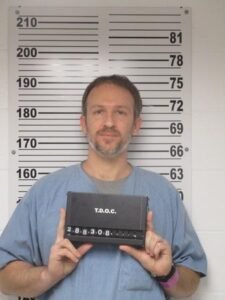
| Name: | EDWARD MULLINS | ||
| Birth Date: | 01/26/1978 | ||
| TDOC ID: | 00288308 | ||
| State ID Number (SID): | 839891 | ||
| Sex: | MALE | Race: | WHITE |
| Height: | 06′ 02″ | Complexion: | FAIR |
| Weight: | 150 lbs. | Eye Color: | BROWN |
| Hair Color: | BROWN |
| Supervision Status: | INCARCERATED | Assigned Location: | TURNEY CENTER INDUSTRIAL COMPLEX |
| Combined Sentence(s) Length: | LIFE WITHOUT PAROLE | Supervision/Custody Level: | MINIMUM RESTRICTED |
| Sentence Begin Date: | 03/13/1998 | Sentence End Date: |
Joseph Risner Current Information
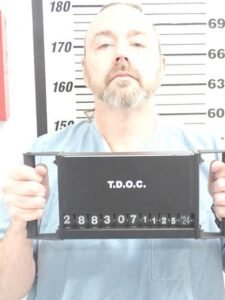
| Name: | JOSEPH RISNER | ||
| Birth Date: | 10/13/1976 | ||
| TDOC ID: | 00288307 | ||
| State ID Number (SID): | 790983 | ||
| Sex: | MALE | Race: | WHITE |
| Height: | 05′ 11″ | Complexion: | FAIR |
| Weight: | 170 lbs. | Eye Color: | HAZEL |
| Hair Color: | BROWN |
| Supervision Status: | INCARCERATED | Assigned Location: | NORTHEAST CORRECTIONAL COMPLEX |
| Combined Sentence(s) Length: | LIFE WITHOUT PAROLE | Supervision/Custody Level: | MINIMUM RESTRICTED |
| Sentence Begin Date: | 03/13/1998 | Sentence End Date: |
Crystal Sturgill Current Information
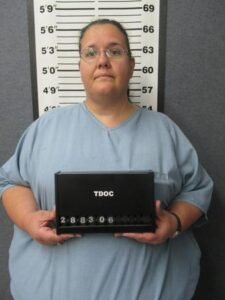
| Name: | CRYSTAL STURGILL | ||
| Birth Date: | 03/13/1979 | ||
| TDOC ID: | 00288306 | ||
| State ID Number (SID): | 790982 | ||
| Sex: | FEMALE | Race: | WHITE |
| Height: | 05′ 06″ | Complexion: | MEDIUM |
| Weight: | 248 lbs. | Eye Color: | BROWN |
| Hair Color: | BROWN |
| Supervision Status: | INCARCERATED | Assigned Location: | WEST TENNESSEE STATE PENITENTIARY |
| Combined Sentence(s) Length: | LIFE WITHOUT PAROLE | Supervision/Custody Level: | MINIMUM RESTRICTED |
| Sentence Begin Date: | 03/13/1998 | Sentence End Date: |
Jason Bryant Current Information
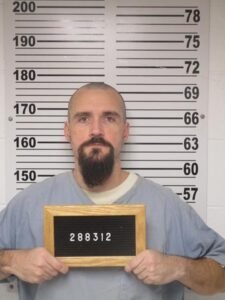
| Name: | JASON BRYANT | ||
| Birth Date: | 07/18/1982 | ||
| TDOC ID: | 00288312 | ||
| State ID Number (SID): | 00898101 | ||
| Sex: | MALE | Race: | WHITE |
| Height: | 05′ 09″ | Complexion: | FAIR |
| Weight: | 175 lbs. | Eye Color: | BROWN |
| Hair Color: | BROWN |
| Supervision Status: | INCARCERATED | Assigned Location: | NORTHWEST CORRECTIONAL COMPLEX |
| Combined Sentence(s) Length: | LIFE WITHOUT PAROLE | Supervision/Custody Level: | MINIMUM RESTRICTED |
| Sentence Begin Date: | 03/13/1998 | Sentence End Date: |
Karen Howell Current Information
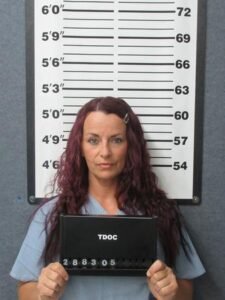
| Name: | KAREN HOWELL | ||
| Birth Date: | 09/25/1979 | ||
| TDOC ID: | 00288305 | ||
| State ID Number (SID): | 842843 | ||
| Sex: | FEMALE | Race: | WHITE |
| Height: | 05′ 02″ | Complexion: | MEDIUM |
| Weight: | 104 lbs. | Eye Color: | GREEN |
| Hair Color: | BROWN |
| Supervision Status: | INCARCERATED | Assigned Location: | DEBRA K. JOHNSON REHABILITATION CENTER |
| Combined Sentence(s) Length: | LIFE WITHOUT PAROLE | Supervision/Custody Level: | MINIMUM RESTRICTED |
| Sentence Begin Date: | 03/13/1998 | Sentence End Date: |
Natasha Cornett Case
The van rolled through the twilight, gravel crunching beneath its wheels and a few quiet sobs escaping from inside.
The sun had set, and dusk thickened to dark. The van stopped, and the doors opened.
One by one, the occupants climbed out — from behind the wheel, the father, a tall, thin man in his 30s; from the back, the mother, slightly younger and holding the hands of their daughter and son; two women in black; and a man and a boy, each holding a gun. A car pulled up the road behind them, circled around the van and came to a stop, its headlights still on.
One gunman turned to the other.
“What do you think we should do?” he asked. “Do you think we should let them go or do you think we should kill them?
Six people, all serving life sentences with no chance of parole, know what happened next that Sunday evening of April 6, 1997. Each tells a slightly different story. In each story, another fires the fatal shots.
John Huffine can recite the events from memory. The retired detective knows every inch of the spot along Payne Hollow Lane in rural Greene County, right down to the number of feet from the spot where the van parked to the main road, to the nearest house, to the ditch where deputies found four bodies lying in a bloody pile. Twenty years later, he can point out all the landmarks.
Here were the tire tracks. There was a shell casing. This house wasn’t here then. That tree was smaller. The stump — that’s gone.
He can tick off all the names on his fingers — Vidar and Delfina Lillelid, the Knoxville couple whose names still call to mind one of the most gruesome and notorious murder cases in modern East Tennessee history; their 6-year-old daughter, Tabitha, who offered chocolates to her killers on the ride to her death; their 2-year-old son, Peter, the only one of the family to survive.
He remembers the killers, too, whose names, mug shots and fascination with devil worship, blood-drinking and the occult topped front pages, TV newscasts and tabloid covers for months after the killing, and whose motives still drive online debates among true-crime aficionados. Natasha Cornett, then 18; Karen Howell, then 17; Joseph Lance Risner, then 20; Jason Blake Bryant, then 14; Joseph Dean Mullins, then 19; and Crystal Rena Sturgill, then 18, all deny to this day they knew what was about to happen on the side of that gravel road
The longtime investigator knows how the killers met their victims, can tell the story of how the family, devout Jehovah’s Witnesses headed home from a religious convention, stopped at the rest area on Interstate 81 South at just the right time to cross paths with six Kentucky youths on the run from police, parents and a community they hated. He knows the path they followed from there to the murder scene. He knows how many shots were fired, in what order and from what distance.
What he still can’t say for sure is exactly what happened after the van stopped.
“Everybody has their theory, and I have mine,” Huffine said. “I think it was a crime of opportunity. All the elements just came together. But this case is like an inkblot. Everybody who looks at it sees something different.
The six still have their defenders, from family members to strangers who don’t dispute their guilt but insist all shouldn’t die behind bars. Attorneys for Bryant and Howell have filed motions to reopen their exhausted appeals, citing recent U.S. Supreme Court decisions that restrict the imposition of life sentences on juveniles. Howell’s motion could be heard April 21.
Berkeley Bell, who prosecuted the case as district attorney general, sees not an inkblot, but a clear-cut face-off between good and evil.
“It was the highlight of my career as a prosecutor,” said Bell, now retired after 32 years in office. “The whole thing was driven by evil — almost a supernatural-type evil. That sense of evil just permeated the whole thing from start to finish. It infused the defendants, and it empowered them. That’s what I believed then, and my opinion has not changed.
Natasha Cornett Video
Watch Natasha Cornett Video
The Lillelid Murders: How a Tennessee Carjacking By Six Teens Became One of America’s Most Haunting True Crime Cases
WordPress Blog Post Draft — Ready to Paste
Title: The Lillelid Murders: How a Tennessee Carjacking by Six Kentucky Teens Became One of America’s Most Haunting True Crime Cases
Slug: lillelid-murders-1997-true-crime
Category: True Crime
Tags: Lillelid murders, Natasha Cornett, Greene County Tennessee, carjacking, Jehovah’s Witnesses, Peter Lillelid, felony murder, 1990s crime
Meta Description: On April 6, 1997, Vidar and Delfina Lillelid and their 6-year-old daughter Tabitha were shot dead near Baileyton, Tennessee during a carjacking by six youths from Kentucky. Their 2-year-old son Peter survived. All six received life without parole. This is the full story.
Introduction
If you grew up in East Tennessee in the late 1990s, you remember where you were when you heard about the Lillelids. It was not just a murder. It was a carjacking that turned into an execution on a dirt road, committed by strangers, against a family driving home from church.
On April 6, 1997, Vidar Lillelid, 34, his wife Delfina, 28, their daughter Tabitha, 6, and their son Peter, 2, stopped at an Interstate 81 rest area near Baileyton in Greene County. They were approached by six young people from Pikeville, Kentucky, ages 14 to 20, who needed a better car to get to New Orleans. Within an hour, Vidar and Delfina were dead at the scene, Tabitha was dying in a hospital, and Peter was fighting for his life with two gunshot wounds.
The case became nationally known not because of a mystery, the killers were caught two days later, but because of the sheer randomness, the youth of the perpetrators, and the survival of Peter. All six received three life sentences plus 25 years. None were proven to be the sole shooter, and that fact still fuels debate about felony murder law today.
The Lillelid Family
Vidar Lillelid was born and raised in Bergen, Norway, and moved to the United States in 1985. In 1989 he married Delfina Zelaya, a first-generation Honduran American from New York City, whom he had met through their common involvement in the Jehovah’s Witnesses. They settled in the Powell community outside Knoxville, Tennessee.
They had two children: Tabitha, born October 30, 1990, and Peter, born March 3, 1995. Both children held dual Norwegian and American citizenship. Friends described Vidar as quiet and devout, Delfina as warm and musical. On the weekend of April 5-6, 1997, the family attended a Jehovah’s Witnesses convention in Johnson City and were driving home on I-81 when they stopped at the rest area.
The Six From Kentucky
The group that approached them was not a gang in the traditional sense, but six troubled youths traveling together.
- Natasha Cornett, 18, born in Betsy Layne, Kentucky. The acknowledged leader. She had left school before ninth grade, had a history of alcohol and drug use beginning in early teens, and had prior arrests for forgery and for assaulting her mother. She married at 17 and divorced ten months later.
- Joseph Risner, 20, the oldest. Born in Hazard, Kentucky, he had a GED, an Army discharge for marijuana use, and owned the Chevrolet Citation the group started in.
- Crystal Sturgill, 18, a senior at Betsy Layne High School with an ACT score of 28. She had no criminal record but had moved through thirteen different homes in the four months before the murders after accusing her stepfather of sexual abuse.
- Dean Mullins, 19, who had left school in 12th grade to work on his GED. He had no criminal record and friends said his behavior worsened after becoming involved with Cornett, whom he planned to marry.
- Karen Howell, 17. Born in Ohio, she moved to Kentucky at age 3. She had an IQ of 78, a history of self-mutilation beginning at 13, four prior suicide attempts, and an interest in witchcraft that led her mother to bring in ministers to “cast out demons.” She was a legal minor at the time.
- Jason Bryant, 14. The youngest. Born July 18, 1982, in Hellier, Kentucky, he had an IQ of 85 and the emotional and social skills of an 11-year-old. He had a history of alcohol and drug abuse beginning as early as age 3. He was also a legal minor.
All six were from Kentucky, were known to have had troubled backgrounds, struggled academically or with substance abuse, and with the exception of Bryant had attended Betsy Layne High School.
They left Pikeville on April 5 with $500 stolen from Howell’s father and two handguns, a 9 mm and a .25 caliber, intending to drive to New Orleans. Shortly after leaving, they realized Risner’s car would not make it.
The Carjacking at the I-81 Rest Stop
At the rest stop outside Baileyton, eyewitnesses observed the six youths in conversation with the Lillelid family. Vidar, carrying his son Peter, had approached Cornett and Howell to discuss his religious views, a common practice for Jehovah’s Witnesses.
Risner and Bryant joined the conversation. At some point, Risner displayed one of the guns and said, “I hate to do you this way, but we are going to have to take you with us for your van.” Vidar pleaded with the group, offering his keys and wallet in exchange for being left at the rest stop, but Risner refused.
Risner, Bryant, Howell, and Cornett rode in the Lillelids’ van. Vidar drove while Risner held the gun on him from the passenger seat. Mullins and Sturgill followed in Risner’s car. In an attempt to calm her children, Delfina began to sing. Bryant reportedly ordered her to stop.
Payne Hollow Lane
Risner directed Vidar off the interstate to a secluded road at the next exit, Payne Hollow Lane, near Greeneville. The family was lined up against a ditch.
What happened next was described at trial by forensic pathologist Cleland Blake and by the defendants’ own statements.
Vidar was shot six times. The first shot entered his right eye from a 9 mm, traveled through his temple, and would have caused immediate loss of consciousness. He fell on his back and was shot three more times in the chest in a pattern that formed an equilateral triangle. Two additional shots, one from the .25 caliber, struck lower on his torso. He likely died within minutes.
Delfina was shot eight times. The first two shots shattered bones in her left arm and left thigh, leaving her unable to stand but conscious. She was then shot six more times while on her back. Three shots pierced her stomach, pancreas, spleen, left kidney, and left adrenal gland in a triangular pattern similar to Vidar’s. A bullet lodged in her spine. She was not killed instantly. Blake testified she could have been conscious for as long as 25 minutes, including while her body was driven over by the van as the group left.
Tabitha, age 6, was shot once in the head with a small-caliber weapon. The bullet entered the left side of her skull and exited behind her right ear, causing immediate brain death. She was kept on life support until the next day, when her uncle authorized organ donation. Physicians harvested her heart, liver, gallbladder, kidneys, pancreas, spleen, and adrenal glands.
Peter, age 2, was shot twice. One shot entered behind his right ear and exited near his right eye. The second penetrated his back and exited his chest. He was airlifted by Lifestar helicopter to the University of Tennessee Medical Center in critical condition. He survived but required vigorous resuscitation for a contusion to his right lung. Doctors removed his damaged eye 11 days later. He spent 17 days in the hospital before transfer to rehabilitation.
After the shooting, Bryant reportedly checked the bodies and said, “They’re still fucking alive,” and shot them again.
The Flight and Arrest
After removing the license plates from Risner’s car, the group abandoned it at the crime scene and continued toward New Orleans in the Lillelids’ van, leaving the family for dead. They stopped at a Waffle House in Georgia but left when police arrived. They then decided to drive to Mexico.
They were initially denied entry at the border for lack of identification but eventually crossed. In Mexico, Bryant was shot in the hand and leg in an unrelated incident. Mexican police stopped the van, found a knife and a photo album belonging to the Lillelid family, and ordered the group back to the United States. American border patrol officers in Arizona searched them and took them to jail.
At the time of their arrest, two days after the murders, several of them had personal items belonging to the Lillelids in their possession.
The Investigation
Greene County Sheriff’s investigators quickly linked the abandoned Citation to the group. The physical evidence was overwhelming: ballistics matched the two guns, the van contained the family’s belongings, and multiple defendants gave statements.
District Attorney Berkeley Bell later said in interviews that Bryant was the only one he could prove was a shooter, based on an admission Bryant made to Arizona Officer Deb Mackey that he had shot Vidar. That statement was suppressed because Bryant had not been read his rights. Bryant later changed his story, saying Mullins and Risner did the shooting. The judge ultimately opined that another undetermined member might also have fired.
The motive cited in the initial charging documents was listed as resentment against Jehovah’s Witnesses due to Satanism, a theory fueled by rumors. During the sentencing hearing, Cornett said her first attorney coached her to say she was the “Daughter of Satan.” Bell considered the Satanic angle a distraction, though he utilized occult experts during his investigation. No evidence of organized Satanic involvement was presented at trial, and the omission was cited in Cornett’s unsuccessful 2002 appeal.
Bell also told media the teens planned a “killing spree” inspired by the film Natural Born Killers, and that the bodies were arranged in the shape of a cross. First responders refuted this, stating the teens were just trying to get the hell out of there and did not arrange the bodies.
The Plea Deal
Tennessee law allowed the death penalty for those 16 and older at the time, meaning Cornett, Risner, Mullins, and Sturgill were eligible, while Howell and Bryant were not. Rather than risk inconsistent verdicts, Bell offered a global plea: if all six pleaded guilty to first-degree felony murder, the death penalty would be taken off the table.
The deal required unanimity and a very short acceptance window. Howell later stated for the record that she wanted to fight it in court, even though I was not subject to the death penalty. But they were threatening to kill everyone if I didn’t sign it. So I just caved in to the pressure.
All six signed. In March 1998, they were convicted of felony murder as participants in a felony kidnapping and carjacking that resulted in three deaths, and attempted murder of Peter. Each received three consecutive life sentences without the possibility of parole, plus an additional 25 years for the attempted murder. The judge applied the same aggravated circumstances to all, without determining who pulled the trigger.
The Aftermath for Peter
Soon after Peter’s medical condition stabilized at the end of April 1997, a custody battle began between his maternal grandmother Lydia Selaya in Miami, Florida, and his paternal aunt Randi Heier in Sweden. Citing Heier’s pledge to raise Peter in the faith and teachings of the Jehovah’s Witnesses, Judge Fred McDonald awarded her custody on July 1, 1997.
Peter was adopted by Heier and her husband Odd, moved to Märsta in the Stockholm area, and acquired Swedish citizenship while retaining his American nationality. He renounced his Norwegian citizenship. He grew up bilingual in Swedish and English. As of 2007, when he was about to turn twelve, he still had trouble walking because of the injuries.
By 2017, Peter had finished his IT education and was looking for work. In 2019, he moved back permanently to the United States after numerous visits over the years. He married his wife Caitlin in 2020, and the couple lives in Connecticut. He has spoken publicly only rarely, telling WBIR in 2022 that he focuses on overcoming tragedy rather than on the perpetrators.
Vidar, Delfina, and Tabitha were buried together at Edgewood Cemetery in Knoxville.
Life in Prison and Later Legal Challenges
All six were initially sent to Tennessee prisons. In 2001, Cornett was investigated for allegedly helping death row inmate Christa Pike attack another prisoner with a shoelace, though insufficient evidence was found to charge her.
The legal landscape changed in 2012 with Miller v. Alabama and in 2016 with Montgomery v. Louisiana, which barred mandatory life without parole for juveniles. In 2016, Bryant and Howell became eligible for resentencing because they were minors at the time of the crime.
More recently, a Tennessee Supreme Court ruling clarified that juveniles convicted of first-degree murder as minors on or after July 1, 1995, become eligible for parole after 51 years. That ruling allows two of the Lillelid murderers to seek parole after 51 years in prison, though for Bryant and Howell that would mean first eligibility in their late 60s.
Jason Bryant filed a federal petition challenging his life-without-parole sentence as a violation of the Eighth Amendment, arguing his age and low IQ at the time. As of 2025, all six remain incarcerated.
Lessons and Memory
Greene County still marks the anniversary. Law enforcement officers who responded have described the scene at Payne Hollow Lane as the worst of their careers, not because of gore, but because of the ages involved on both sides.
For the true crime community, the Lillelid murders caution against easy explanations. There was no Satanic cult, despite early headlines. There was no Natural Born Killers spree, despite the prosecutor’s theory. What the record shows is six deeply troubled youths from Kentucky with drugs, guns, and a stolen car, and a family of four who stopped to talk about God at the wrong rest stop.
The legal system responded with the harshest punishment short of death, applied equally. Whether that was justice or a failure to individualize culpability is still debated in law reviews and on podcasts. What is not debated is the loss: Vidar, 34; Delfina, 28; Tabitha, 6. And the resilience of Peter, who at age 2 took two bullets and lived to tell a different story, not of vengeance, but of a life rebuilt in Sweden and Connecticut.
If you visit Edgewood Cemetery in Knoxville, you will find three small headstones together. If you drive I-81 past Baileyton, you will pass the rest area where a conversation began, and a few miles away, Payne Hollow Lane, where it ended. The road is still deserted. The memory is not.