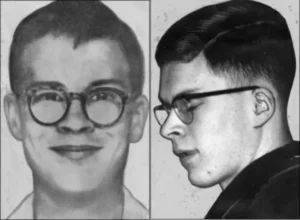
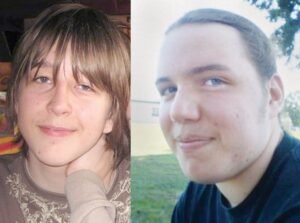
Kruse Wellwood and Cameron Moffat are two killers from Canada who were convicted of the murder of Kimberly Proctor
According to court documents Kruse Wellwood and Cameron Moffat would invite Kimberly Proctor over to Wellwood home. When the teen arrived she would be repeatedly sexually assaulted. The two killers would murder Kimberly before mutilating her body and placed inside of a freezer
Kruse Wellwood and Cameron Moffat would later put Kimberly Proctor body inside of a bag, boarded a bus and wood attempt to burn her remains in a wooded area.
Kruse Wellwood and Cameron Moffat would be arrested, convicted and sentenced to life in prison with no chance of parole for ten years
Since 2021 both killers had been repeatedly been denied parole and deemed a high risk to reoffend
Kruse Wellwood and Cameron Moffat Case
Two teens who brutally raped and murdered 18-year-old Kimberly Proctor just outside of Victoria last year have been sentenced to life in prison with no possibility of parole for 10 years.
On Monday, B.C. Supreme Court Justice Robert Johnston sentenced Kruse Hendrik Wellwood, 17, and Cameron Alexander Moffat, 18, as adults and lifted the publication ban that had been protecting their identities since their arrest last June.
Before the packed Victoria courtroom, Johnston ruled a youth sentence would not be of sufficient length to hold the teens accountable for their crimes. He imposed the maximum adult sentence available for young offenders.
“It goes without saying first-degree murder with intent to kill is the most serious of offences. The circumstances of this murder as admitted by the young persons are so horrific that no words can adequately convey the inhumane cruelty these young men showed Miss Proctor,” said Johnston.
“They planned in advance to sexually assault and kill Miss Proctor. They chose her because they thought she would be an easy target, not necessarily because either of them had any ill will towards her.”
Members of Proctor’s family, including mother Lucia, father Fred, brother Rob, and her aunts and grandparents, filled the front row of the courtroom.
Behind them sat police investigators, friends and members of the media. Lucia’s face was etched with sadness. She wiped away tears as Wellwood stood, hands clasped in front, with lawyer Bob Jones by his side while Johnston sentenced him to life in prison. One person in the public gallery burst out crying.
Defence lawyer Steven Kelliher stood by Moffat, who appeared unemotional as he was sentenced to life in prison.
Outside court, in a chilling downpour, Fred called the teens “animals” and said they deserve to die a long, slow, painful death.
“I don’t even like to call them animals because Kim was such an animal lover,” said Lucia. “To me they’re just monsters and monsters are not rehabilitatable.”
She lashed out at Wellwood’s and Moffat’s parents, saying they should have done something about their sons’ risky behaviour before it escalated.
“This didn’t happen overnight this behaviour. You see the signs. You know when something is wrong with your child . . . To see what these two have been like and to totally ignore it, when you know as a parent you’ve failed.”
The constant reminders of Kimberly make it impossible for the family to ever fully heal, said Fred. “I don’t know how we can move forward at this point. I guess time will heal,” he said.
A hearing will be held several weeks from now to determine whether Wellwood and Moffat will begin serving their sentences in a federal prison or remain at the Youth Detention Centre until they are 20. The date for that hearing will be set on April 13. The Crown will ask the court to place the teens in the adult correctional system.
In October, Wellwood and Moffat pleaded guilty to the first-degree murder of Proctor, whose badly-burned body was found under a bridge on the Galloping Goose Trail on March 19, 2010. The two admitted they lured the Grade 12 student to Wellwood’s home, tied her up, gagged her, sexually assaulted her, beat her, suffocated her and mutilated her body with a knife over a period of several hours. They then put her body in a freezer, and the next day travelled by bus to the Victoria-area trail and set it on fire.
Johnston also sentenced Wellwood and Moffat to five-year concurrent sentences on the charge of indignity to human remains, authorized the taking of DNA samples from the teens, and imposed a 10-year firearms prohibition. Charges of sexual assault and unlawful confinement were stayed last week during the grim two-day sentencing hearing in which Crown prosecutor Peter Juk urged Johnston to impose adult sentences for the protection of the public.
Neither defence lawyer opposed the Crown’s application for an adult sentence.
“There was no point in making submissions,” Jones said after the hearing last week. “To have done so would have insulted the intelligence of the judge and not afforded the situation the dignity it deserved. We did our best for our clients, but we also wished to avoid a media circus like Reena Virk (who was beaten to death in the Victoria area by two teens in 1997). We wanted to consider the feelings of the Proctor family as well.”
But Jones will urge the court to keep Wellwood at the youth centre.
“The Crown might apply to move him to a federal institution because there aren’t facilities to treat him at the youth centre. But there are forensic psychiatric clinics in this town and you have to consider his age. I’m of the view he’s doing well at the youth detention centre,” said Jones.
Kruse Wellwood is subject to control and discipline in the secure environment.
“He’s not beating up all the other kids. If anything, he’s had to ward off a lot of stuff himself.”
In eerily similar circumstances, Kruse Wellwood’s father, Robert Dezwaan, is serving a life sentence for the 2001 murder of 16-year-old Cherish Billy Oppenheim in Merritt, B.C. Dezwaan got her drunk, sexually assaulted her and beat her to death.
Growing up, Wellwood was taunted continuously by other children once the information about his father was made public, said Jones.Kruse
“He’s still only 17 and to place him in the hardened environment of the federal penitentiary where he is going to be the subject of bullying or sex attacks has made him very afraid. I don’t know if that’s because his father is there and has told him things or if it would also create problems for his father,” said Jones.
Kelliher said he would not oppose Moffat’s transfer to the federal system.
“The evidence is overwhelming they can’t be treated in the juvenile system. It suggests they can be best treated in the federal system. We hope the classification will take into consideration his family is here in B.C. That’s a huge factor for a young person.
“And it mustn’t be wholly forgotten these young people have families too and that they are suffering terribly.”
Court-ordered psychiatric and psychological reports on the teens — who were 16 and 17 at the time of the murder — show they are at a high risk to re-offend violently and sexually. The reports also show there is little chance they can be rehabilitated.
Kruse Wellwood has been diagnosed as a sexual sadist — a tendency to derive sexual gratification from inflicting pain — with very strong psychopathic traits and strong indicators for necrophilia, an erotic attraction to corpses. A psychologist concluded that he is aroused by the physical and psychological suffering of others, has had rape fantasies and is interested in bondage and sexual asphyxia.
Cameron Moffat was not diagnosed as a sexual sadist but has a tendency to sexual deviance and the risk and thrill that go along with it. He has had conduct disorder that began in early childhood which involves defiant, anti-social behaviour.
Kruse Wellwood And Cameron Moffat News
One of two men convicted of the shocking sexual assault and murder of a Langford, B.C., teen in 2010 has had his day parole application denied again.
Then-teenager Kruse Wellwood, along with his co-accused Cameron Moffat, were found guilty of the first-degree murder of Kimberly Proctor, 18, who was one of their classmates.
The court heard that Wellwood and Moffat lured Proctor over to Wellwood’s home where they sexually assaulted her multiple times, killed her, mutilated her body and put it in a freezer. Later, the pair put her body into a duffel bag and boarded a bus to a local trail where they set her remains on fire.
Kruse Wellwood would later attend Proctor’s memorial service, while he was out on bail for assaulting his mother, before he was charged with the murder.
Wellwood applied for day parole earlier this year, which was rejected by the Parole Board of Canada on Aug. 4.
“At sentencing the judge said the murder was so horrific that words could not adequately describe the inhuman cruelty you and your co-accused showed,” reads the Parole Board of Canada’s decision posted on Aug. 4.
Kruse Wellwood was 16 at the time of the murder and was first eligible for parole in 2019. His parole was denied at the time and again in 2020. Since then, the parole board says multiple psychiatric assessments have continued to categorize him at a high risk of re-offending.
The parole board also cited violent and emotional outbursts as a reason why Wellwood was denied parole, though it does note that the violence has so far only been directed to himself.
Some written communication to Moffat was also flagged as a “somewhat concerning” by the board due to the pair’s history.
The parole board says Proctor’s family has remained steadfast in its opposition to Wellwood’s potential parole.
“It is clear from the statements that the murdered victim’s family were forever changed by the violent and cruel way they lost their loved one. They were seriously traumatized,” the parole decision reads.
“They say they have seen no remorse, are angry and do not believe you deserve parole.”
In 2020, Proctor’s father said he felt let down by the justice system.
“I get cranked up about it,” said Fred Proctor after attending Wellwood’s last parole hearing(opens in a new tab). “In this country, it’s the families of the victims that serve the life sentence.
Kruse Wellwood And Cameron Moffat Video
Watch Kruse Wellwood and Cameron Moffat Video – Teens Who Kill – Real Cases of Teen Violence
Kruse Wellwood: How a BC Teen’s Dark Fantasy Became the Kimberly Proctor Murder
On March 18, 2010, 18-year-old Kimberly Proctor left her home in Langford, British Columbia, to meet a friend she trusted. She never came home. Hours later, her body was found burned under a bridge.
The killers weren’t strangers. They were classmates: 16-year-old Kruse Hendrik Wellwood and 17-year-old Cameron Alexander Moffat. What followed was one of the most disturbing youth murder cases in Canadian history — not just for the brutality, but for how openly the killers documented it, bragged about it on World of Warcraft, and showed no remorse.
If you search “Kruse Wellwood” today, you won’t find a redemption story. You’ll find repeated parole denials, psychological reports warning of high sexual violence risk, and a family still serving a life sentence of grief.
This is the full case file.
Who Is Kruse Wellwood?
Kruse Wellwood was born in British Columbia and was 16 at the time of the murder. To teachers at Belmont Secondary School in Langford, he was quiet, troubled, and increasingly isolated. To online friends, he was different.
Wellwood grew up in the shadow of extreme violence. His own father had been sentenced to life in prison for raping and killing a 16-year-old girl — a crime Kruse knew about intimately.
In February 2009, more than a year before the murder, Kruse posted a chilling entry on a WordPress blog titled “Early Warning Signs of a Serial Killer.” He listed common traits including animal abuse, fascination with fire, abandonment by a father, and an intense interest in sadomasochistic porn. He wrote: “The peculiar thing is I meet all fourteen criteria” of a serial killer, adding, “I suppose only time will tell.”
It wasn’t fiction. It was foreshadowing.
The Victim: Kimberly Proctor
Kimberly Proctor, 18, was a Grade 12 student, described by family as kind, trusting, and artistic. She loved animals and had recently started babysitting. She knew both boys from school.
She was not a random target. Police and prosecutors would later prove she was deliberately lured to Wellwood’s home under the pretense of hanging out with friends.
March 18, 2010: The Crime
According to court documents, Wellwood and Moffat lured Kimberly Proctor over to Wellwood’s home. When the eighteen year old arrived she would be repeatedly sexually assaulted, murdered, mutilated and placed in a freezer.
The court heard that Wellwood and Moffat lured Proctor over to Wellwood’s home where they sexually assaulted her multiple times, killed her, mutilated her body and put it in a freezer. Later, the pair put her body into a duffel bag and boarded a bus to a local trail where they set her remains on fire.
Proctor was strangled and suffocated until she died – her badly burned body found the next day beneath a bridge.
The pair had pleaded guilty to luring Proctor to Wellwood’s home where they bound, raped and murdered her, before transporting her body by bus to a wooded area and burning it beneath a bridge.
The brutality shocked even veteran homicide detectives. Justice Robert Johnston would later say at sentencing that the murder was so horrific that words could not adequately describe the inhuman cruelty.
The Bus Ride
In a detail that haunts the community, the two teens put Kimberly’s body into a duffel bag, boarded a BC Transit bus like any other passengers, and went to a wooded area where they would burn her body.
The World of Warcraft Confession
The case became internationally known as the “WoW Murder” because of what happened next.
Back in spring 2010, two teenage boys—Kruse Wellwood and Cameron Moffat—raped and killed 18-year-old Kimberly Proctor before mutilating and burning her body under a bridge. Then, one of the boys told a friend on World of Warcraft what they did.
Wellwood logged into WoW and bragged to an online friend, sending links to news articles as they appeared. He showed no remorse. That digital trail, combined with text messages and wiretaps, became critical evidence.
Police also recovered text messages between Moffat and Wellwood intercepted by police, online chats between the killers and Proctor, and forensic lab reports.
Hours after killing Kimberly, Moffat was texting an ex-girlfriend trying to convince her to come to Wellwood’s home. She refused, unknowingly saving her own life.
The Arrest and The Memorial
Wellwood was initially out on bail for a separate crime — assaulting his mother — when Kimberly was murdered. In a staggering display of callousness, Wellwood would later attend Proctor’s memorial service, while he was out on bail for assaulting his mother, before he was charged with the murder.
Both teens were arrested in June 2010. In a sheriff’s van on the way to their first court appearance, a wiretap recorded them laughing and discussing their hair and shoes and making light of the charges against them.
Trial: Sentenced as Adults
Despite their ages (16 and 17), the Crown applied to have them sentenced as adults. The judge agreed.
Despite their ages, the judge ruled that Wellwood and Moffat should be sentenced as adults and that their identities should not be protected under the Youth Criminal Justice Act.
In 2011, both pleaded guilty to first-degree murder and indignity to a dead body. Both Wellwood and Moffat pleaded guilty in 2011 and were given life sentences for first-degree murder and indignity to a dead body. Their eligibility for parole was set at 10 years.
Kruse Wellwood and Cameron Moffat would be arrested, convicted and sentenced to life in prison with no chance of parole for ten years.
Why This Case Changed Canadian True Crime
Three factors make the Wellwood case a cornerstone for SEO and true crime content:
- Digital Evidence: It was one of Canada’s first high-profile murders solved with gaming chat logs, texts, and social media. Vanity Fair’s “Murder by Text” feature brought global attention.
- Youth Justice Debate: Canadians were forced to ask: should a 16-year-old who plans torture be protected by the Youth Criminal Justice Act? The judge’s decision to name them set precedent.
- Generational Violence: The fact that Kruse’s father was also serving life for raping and killing a teenage girl fueled national conversations about nature vs. nurture.
Life in Prison and the Parole Failures
Kruse Wellwood was first eligible for parole in 2019. He has been denied every time since.
Wellwood was 16 at the time of the murder and was first eligible for parole in 2019. His parole was denied at the time and again in 2020. Since then, the parole board says multiple psychiatric assessments have continued to categorize him at a high risk of re-offending.
2023-2025 Denials
Wellwood applied for day parole earlier this year, which was rejected by the Parole Board of Canada on Aug. 4. “At sentencing the judge said the murder was so horrific that words could not adequately describe the inhuman cruelty you and your co-accused showed,” reads the Parole Board of Canada’s decision.
The board cited several alarming factors:
- High Risk: The Parole Board of Canada said Wellwood’s risk for “future general, violent, and sexual offending is high,” and that he has not made the necessary gains to mitigate that risk.
- Deviant Artwork: This includes the discovery of approximately 100 “sexually deviant drawings” found in his cell in June 2023, depicting the sexual abuse and torture of women, pregnant women and children “with words and story lines containing profanity, degradation and sadism.”
Wellwood claimed the drawings were “pure fantasy” and a healthy outlet. The board disagreed, noting he continued to rationalize and minimize concerns.
- Secret Contact: It was discovered in May that since September 2024, Wellwood had been in correspondence with someone in the community who had told him they were a 17-year-old girl – information he had not shared with his case management team, as he knew they would forbid it.
- Violent Outbursts: The parole board also cited violent and emotional outbursts as a reason why Wellwood was denied parole, though it does note that the violence has so far only been directed to himself.
Both Kruse Wellwood and Cameron Moffat would apply for parole in 2023 and both would be denied.
The Family’s Life Sentence
Kimberly’s parents, Fred and Lucy Proctor, attend every hearing.
“It is clear from the statements that the murdered victim’s family were forever changed by the violent and cruel way they lost their loved one. They were seriously traumatized,” the parole decision reads. “They say they have seen no remorse, are angry and do not believe you deserve parole.”
Fred Proctor said it plainly after a 2020 hearing: “In this country, it’s the families of the victims that serve the life sentence.”
Cameron Moffat: Where Is He Now?
Moffat, now in his early 30s, has followed a similar path. He was denied day parole in November, and then denied full parole in May due to a high risk of violent reoffending. The board cited his history of violence, sexual deviance, and lack of behavioral stability.
Like Wellwood, he remains in federal custody in British Columbia.
Warning Signs Missed
The Canadian True Crime podcast noted multiple red flags: Wellwood’s blog post, his history of assaulting his mother, animal cruelty rumors, and his fascination with violent porn. Friends later said they were scared but didn’t know how to report it.
This case is now used in BC school programs about bystander intervention and online safety.
Final Thoughts
Kruse Wellwood is not a misunderstood teen. He is a convicted first-degree murderer who, at 16, planned and executed a sexual torture-murder with a friend, then bragged about it in a video game.
Fifteen years later, at age 31, psychological assessments still say his risk to reoffend could not be managed effectively in the community and that further treatment of his sexually deviant interests was necessary.
For true crime writers, the lesson is clear: some stories aren’t about whodunit. They’re about how the system responds afterward — and how a family learns to live with a life sentence of their own.
Kimberly Proctor would have turned 33 in 2025. Her family ensures she is remembered not for how she died, but for the animal lover and artist she was.